
Shopify’s locked URL structure, automatic variant canonicalization, and app ecosystem create SEO problems no other platform has. We fix the duplicate collection URLs, strip out the apps quietly killing your Core Web Vitals, and ship the structured data your theme doesn’t include by default.
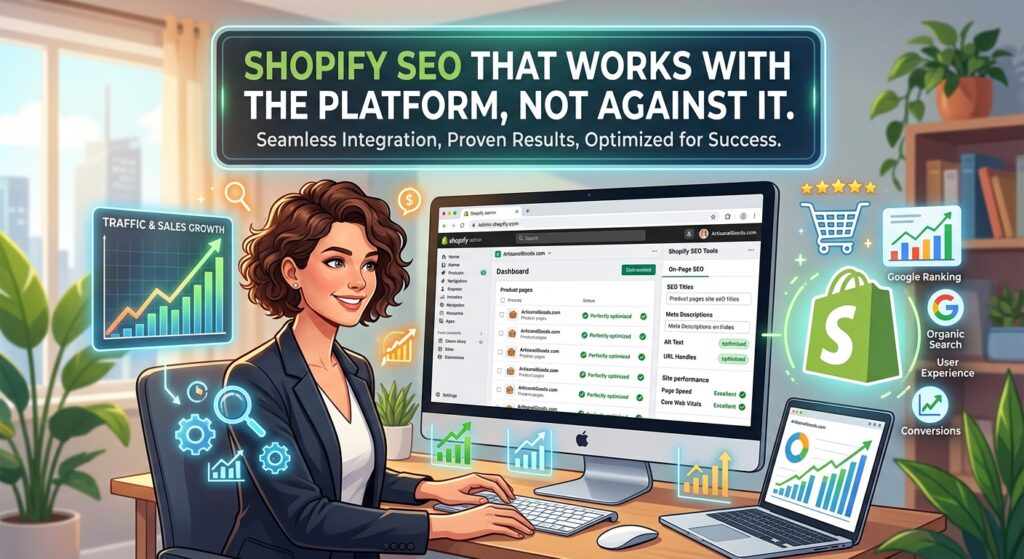
Shopify SEO is the practice of optimizing a Shopify store within the platform’s fixed constraints: mandatory /products/, /collections/, and /blogs/ URL prefixes that cannot be removed, automatic canonicalization of product variants to the base product URL, and a theme and app ecosystem that can quietly generate duplicate collection-based product URLs. Shopify handles variant canonicals correctly out of the box, but internal links on collection pages often point to non-canonical URLs by default, and every installed app can inject JavaScript on every page whether it is used there or not. Shopify SEO means working within these constraints deliberately instead of fighting them.
Shopify enforces /products/, /collections/, and /blogs/ prefixes with no option to remove them, and products in multiple collections generate extra non-canonical URL paths by default.
Every installed app can inject JavaScript and CSS on every page, even pages where it does nothing. This is the single biggest cause of Core Web Vitals failure on Shopify stores.
There is no server config to tune. Every fix happens in Liquid templates, the theme editor, or app settings, which means the work requires genuine Shopify development skill, not generic SEO knowledge.
Every plan starts with an audit and covers the full range of local ranking factors, not just one piece of the puzzle.
A full review of your theme, installed apps, collection structure, and crawl behavior, so we know exactly what is costing you rankings before we touch anything.
Identifying which installed apps are injecting unnecessary scripts, and removing or deferring them so LCP, INP, and CLS pass on mobile.
Identifying which installed apps are injecting unnecessary scripts, and removing or deferring them so LCP, INP, and CLS pass on mobile.
Product, Offer, and AggregateRating structured data added directly to theme.liquid, since most themes ship with only partial schema out of the box.
A product feed kept in sync with your live Shopify catalog so pricing, availability, and images never fall out of step with your free Shopping listings.
Genuine, unique collection descriptions and internal linking, not just a product grid, so collection pages can rank on their own.
Reusable modules so new pages inherit the right typography, spacing, and technical SEO settings automatically as the site grows.
Multi-currency and multi-region setup handled correctly for stores selling across the US, UK, and Australia, including hreflang where it applies.
A full redirect map for stores moving from WooCommerce, Magento, or another platform to Shopify, so existing rankings survive the move.
We review your theme, apps, collection structure, and crawl behavior against your competitors.
Monthly reporting on organic traffic and revenue by product and collection, with the strategy refined every month.
Four fields. We reply with the audit, not a calendar link.
The budget field helps us tell you honestly whether we are the right fit before either of us spends time on a call. We do not share your details with anyone.
No. Shopify can rank extremely well for both product and informational content, but its fixed URL structure, canonical behavior, and app ecosystem require working within the platform’s constraints rather than fighting them.
When a product belongs to multiple collections, Shopify generates a collection-based URL for each one alongside the canonical /products/ URL. Shopify adds a canonical tag, but internal links often still point to the non-canonical version by default, so we fix that in the theme’s Liquid code.
Usually not, and it can make things worse. Installed apps are the single biggest cause of Core Web Vitals failure on Shopify, since every app can inject scripts on every page. The fix is auditing and removing what you don’t need, not adding another app.
Partially. The /products/, /collections/, and /blogs/ prefixes are hardcoded and cannot be removed, but the slug after each prefix is fully yours to control, along with canonical tags, redirects, and internal linking.
Yes, including checkout.liquid optimization and the larger app ecosystems that come with Shopify Plus stores, which typically need a longer technical review than a standard Shopify store.
No credit card. No commitment. Just a real audit.